
In this article, I will omit the standard information found on other websites. It is well known that Ararat is Turkey’s highest peak, what its elevation is, and that it is situated in a location I personally call a geopolitical melting pot. It is also famous as the alleged resting place of Noah’s Ark—one of the main reasons why pilgrims and tourists flock there.
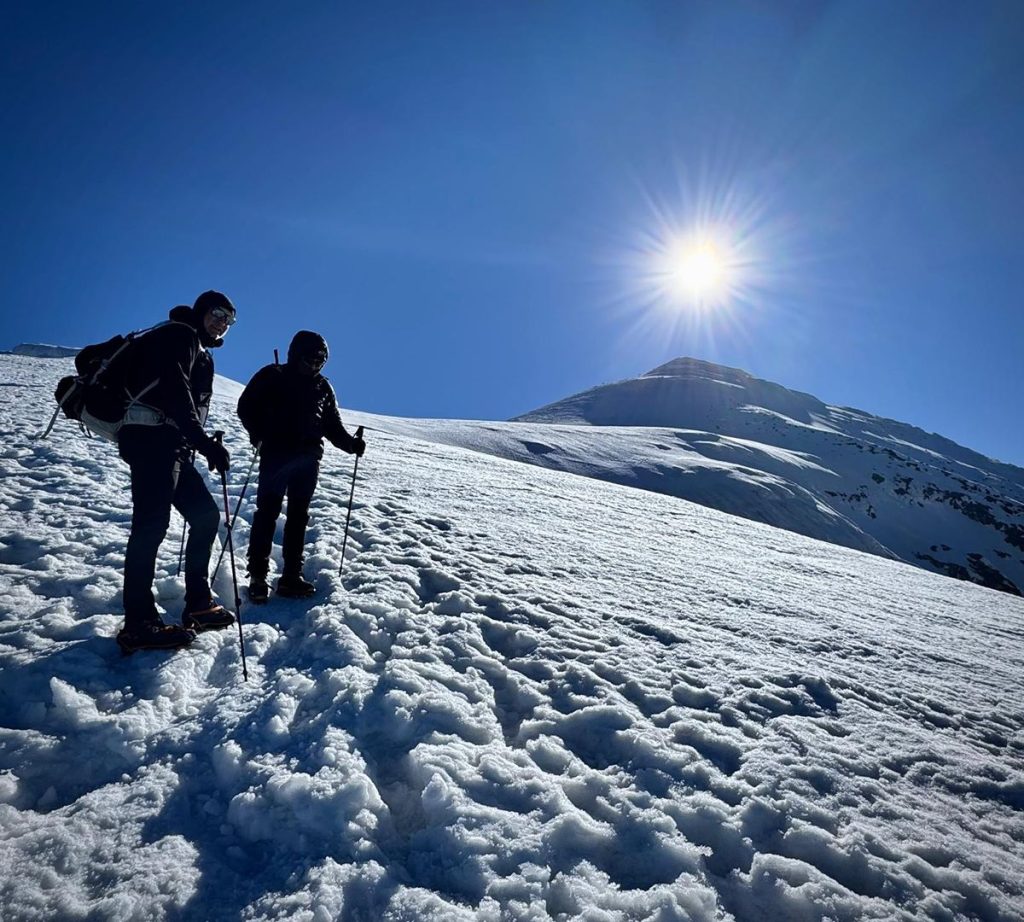
However, I would like to focus on the mountain itself—specifically the ascent—and clear up any doubts you might have if you are still wondering whether this expedition is right for you. The youngest participant to reach the summit was 14 years old, while the oldest was 71. Ararat is not a technically difficult mountain; it is a peak suitable for high-altitude trekking. In my opinion, it is ideal for those wishing to get started in high-altitude mountaineering. The main challenge when climbing Ararat is the altitude, which can cause discomfort if you have never been at such heights before. You might experience headaches, indigestion, or dizziness while hiking the upper sections, but this is far removed from severe altitude sickness, which is generally associated with cerebral edema (HACE) or pulmonary edema (HAPE). To avoid these issues on our expeditions, we prioritize hydration, easily digestible food, adequate rest, and a steady, unhurried pace—all key factors for successfully reaching the summit.
We begin the trek at an altitude of 2,300 m, having reached the starting point by vehicle. There, horses carry our heavy luggage, while we continue with only small backpacks containing the essentials for the hike. Camp 1 is located at 3,300 m and is reserved exclusively for Ararat Travel expedition participants, ensuring privacy and a relaxed atmosphere. In recent years, our Kurdish team has built a facility serving as a dining area and kitchen, where snacks, coffee, and tea are always available. We sleep in tents. The expedition setup offers an up-close look at the unique lifestyle of mountain base camps—an experience with a special appeal. Depending on the time of season, the route to the camp crosses meadows or arid, sun-drenched terrain; the same applies to the stretch between Camp 1 and Camp 2. The incline is gentle, making the journey a pleasant walk—provided a steady pace is maintained—with opportunities to rest and admire the scenery along the way.
The most demanding stretch comes on the day of the summit ascent. We usually start around 1:00 a.m. After having breakfast and replenishing our supplies of water and tea, we set off. The route is tough and quite steep right from the start. We have to tackle a difficult 500-meter section, after which the path becomes somewhat easier.
There is a glacier on Mount Ararat that remains all year round. Upon reaching it, we put on our crampons. From there, it takes only another 30 to 40 minutes to reach the summit, which offers views of Iran, Armenia, and Tendürek—the second most sacred mountain for the Kurds after Ararat.
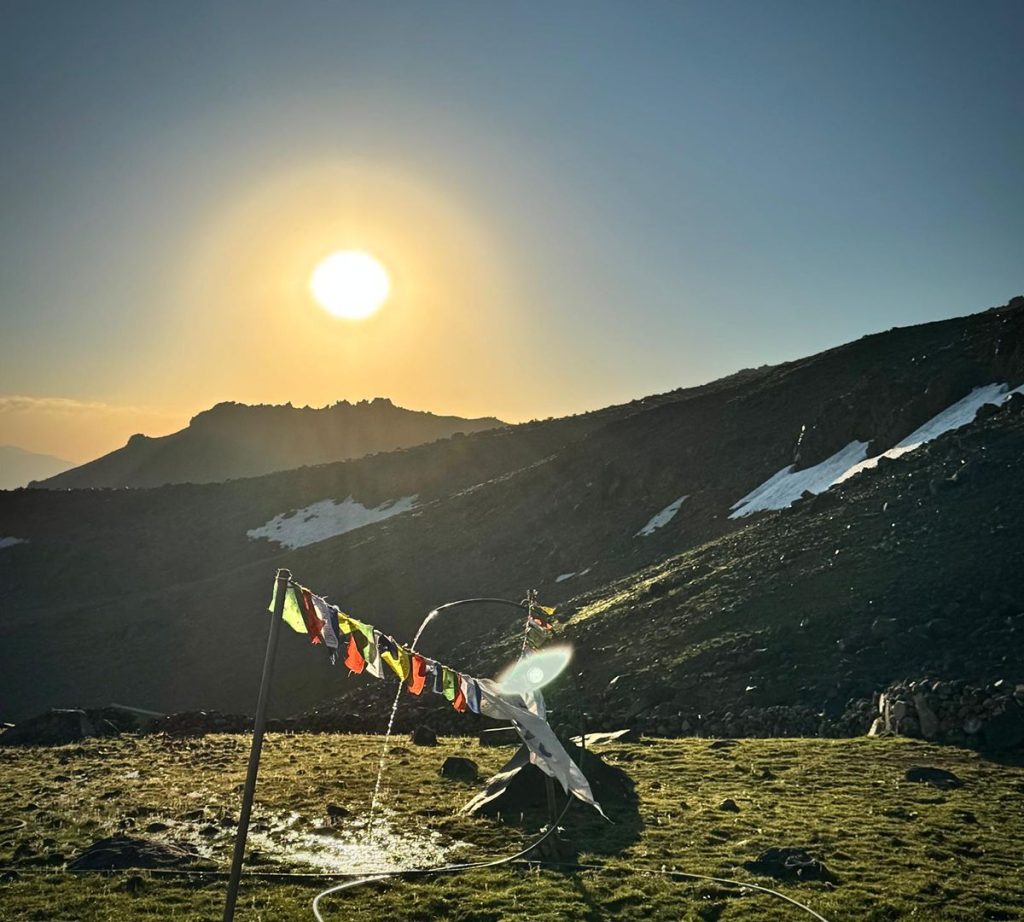
After reaching the summit, we descend to Camp 2 to rest and gather our gear, and then continue the descent to Camp 1, where we spend the night.
In addition to the mountain itself, we also plan to visit Doğubayazıt, the Ishak Pasha Palace, and the tomb of Ahmed-i Hani, an important Kurdish poet.
This entire journey is unique, as it allows us to observe local life, connect with the inhabitants, and immerse ourselves in a reality woven with legends and tales of love for the mountains—the place where they were born and without which they cannot find a sense of belonging anywhere else. Time in the mountains unfolds amidst conversations, shared meals, dancing, and singing.
An extraordinary aura envelops this place. One senses a million stories in this mountain: not only the triumphs and failures of the climbers who visit it, but also local legends and a culture that moves to the rhythm set by the mountain itself. There is something mystical about it all—something that opens your eyes in such a way that you will never see the world the same again. It is hard to put into words; the best thing is to experience it firsthand.
In short, we bring something new back from every trip: a view of the world, a different perspective, new friendships, and experiences. Our hearts are deeply connected to this mountain, and that is how we strive to show it to you.
Join us on a trip to Ararat with Ararat Travel.
Kasia
