
Mount Ararat has stood in the same spot for millions of years. It welcomes us whenever we set out on a journey. For years, we have been preparing, maintaining, and outfitting the places where we stay on the mountain—the campsites and the routes we traverse—with you specifically in mind.
The trek currently begins at an altitude of 2,500 meters, the point where the minibuses drop us off. Last year, the Turkish army built a road reaching up to 3,200 meters to facilitate access and surveillance; however, due to the nature of the terrain, the minibuses can only go as far as the 2,500-meter mark. This is where all the teams begin their expedition. The journey to the initial campsites is neither difficult nor long, yet it is captivating: as we move forward, vast desert landscapes unfold before our eyes, and we begin to feel our bodies and nerves relax with those first deep breaths.
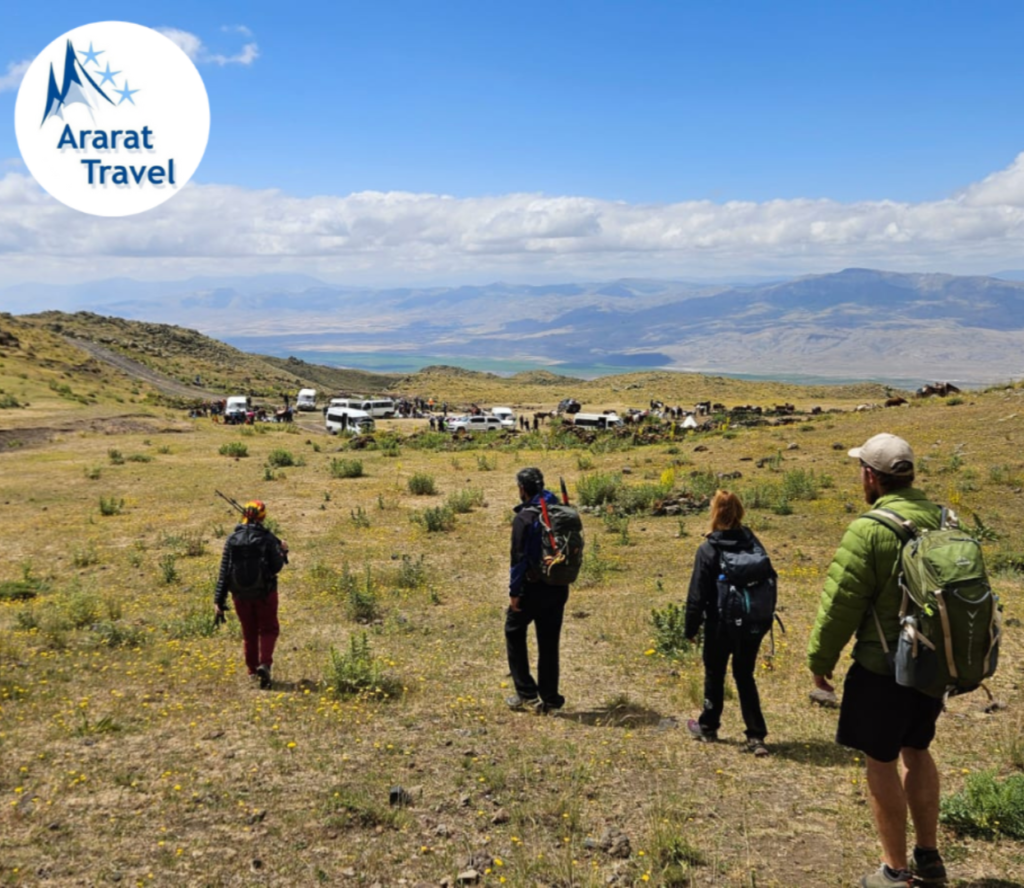
Starting point, 2,500 m
All agencies set up their initial camps at altitudes between 3,000 and 3,300 meters. Over the years—observing participants and ourselves, listening to suggestions, and recognizing that comfort and delicious food facilitate acclimatization—we have adjusted our locations and perfected the site we use today.
Initially, we used a site where people from various agencies gathered; although the atmosphere was sociable and lively, enthusiasm would often wane as the mix of nationalities and temperaments led to subtle friction—particularly regarding sleep schedules and morning routines. Consequently, we began looking for a new location further west. We moved there in 2022, finding a spot that offered greater privacy and tranquility. We all valued harmony and a connection with nature. The kitchen was set up in white yurts, the dining area in a huge orange tent, and we slept in two-person expedition tents. The setup was simple yet increasingly comfortable—so much so that other agencies began to covet the concept and seek out their own camps.
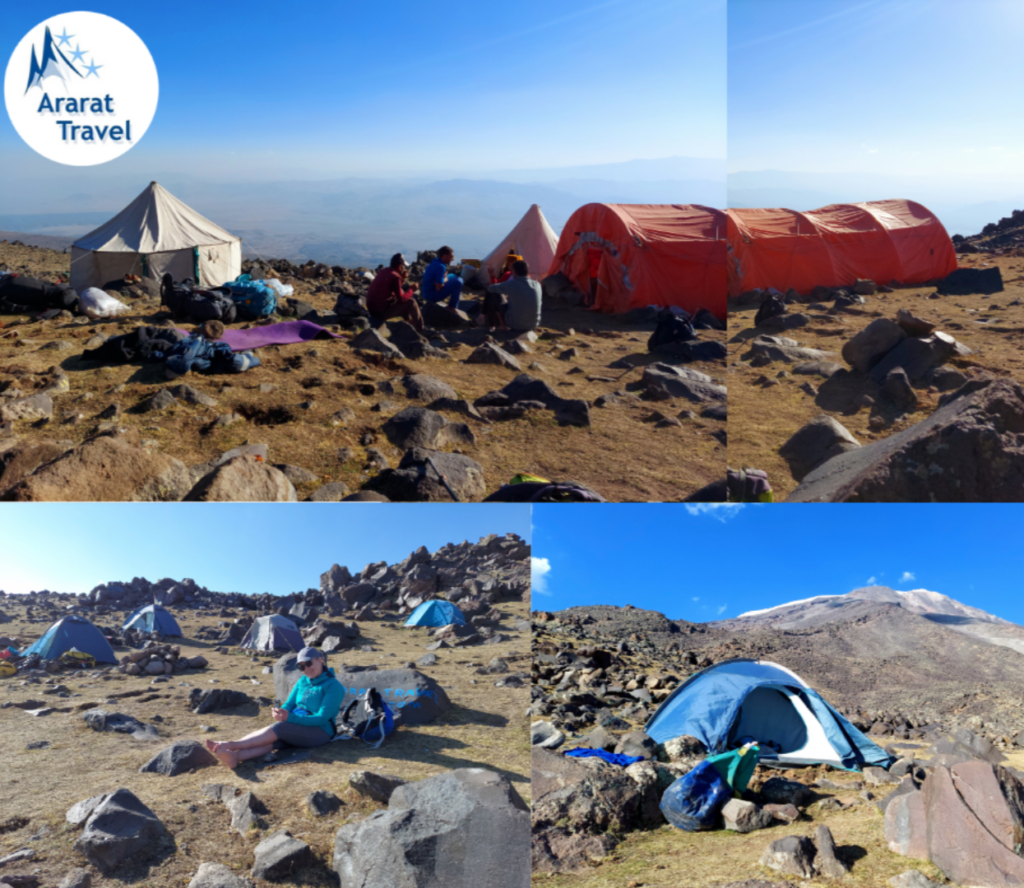
Camp 1, 3,200 m, 2022
The following year, the person in charge, Orhan, found an even better location for Camp 1, situated further west. Preparing and readying the site required a massive effort. The team worked hard to clear away stones, build a stone wall, set up tent platforms, and install sanitary facilities. They succeeded. When the 2023 season began, we were able to use the new site, which was initially set up in a similar way: a yurt, a dining tent, and expedition-style tents. In the intervals between the arrival of different groups, the team began building a shelter. It is not a typical European-style mountain shelter—where one can go inside to warm up, eat, and sleep—but rather a space for cooking Kurdish dishes and enjoying meals.
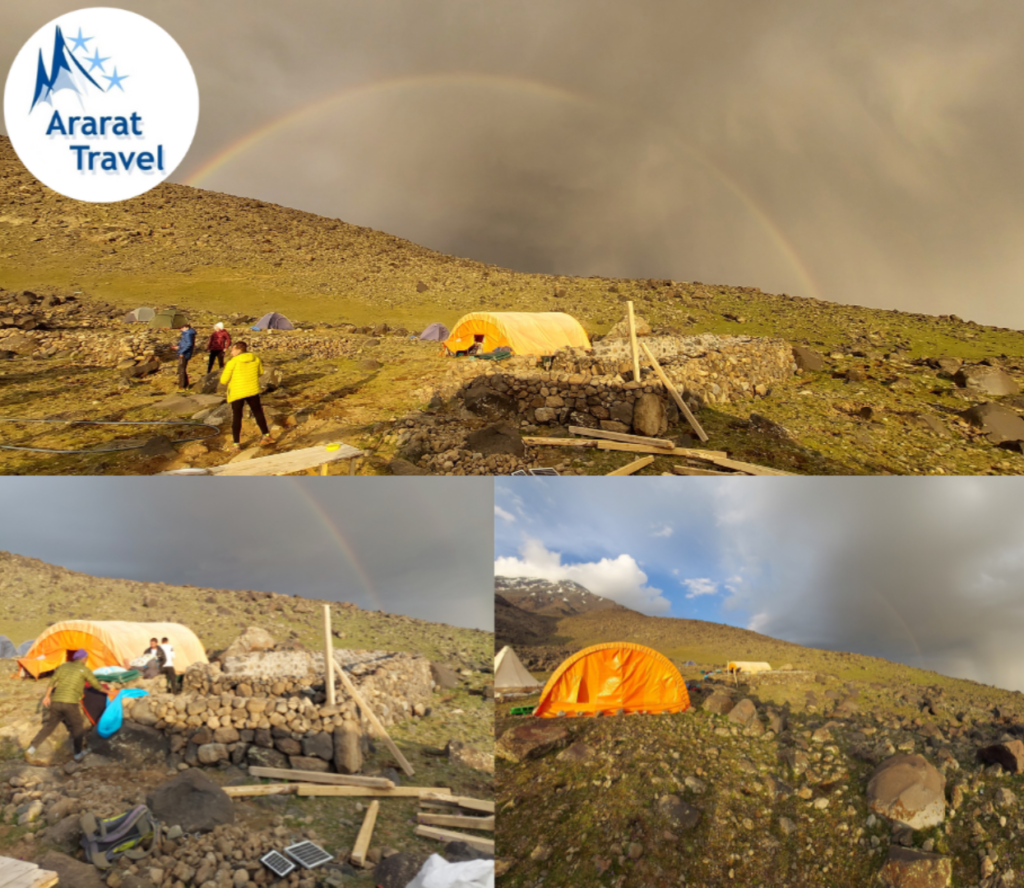
Camp 1, 3,200 m, 2023
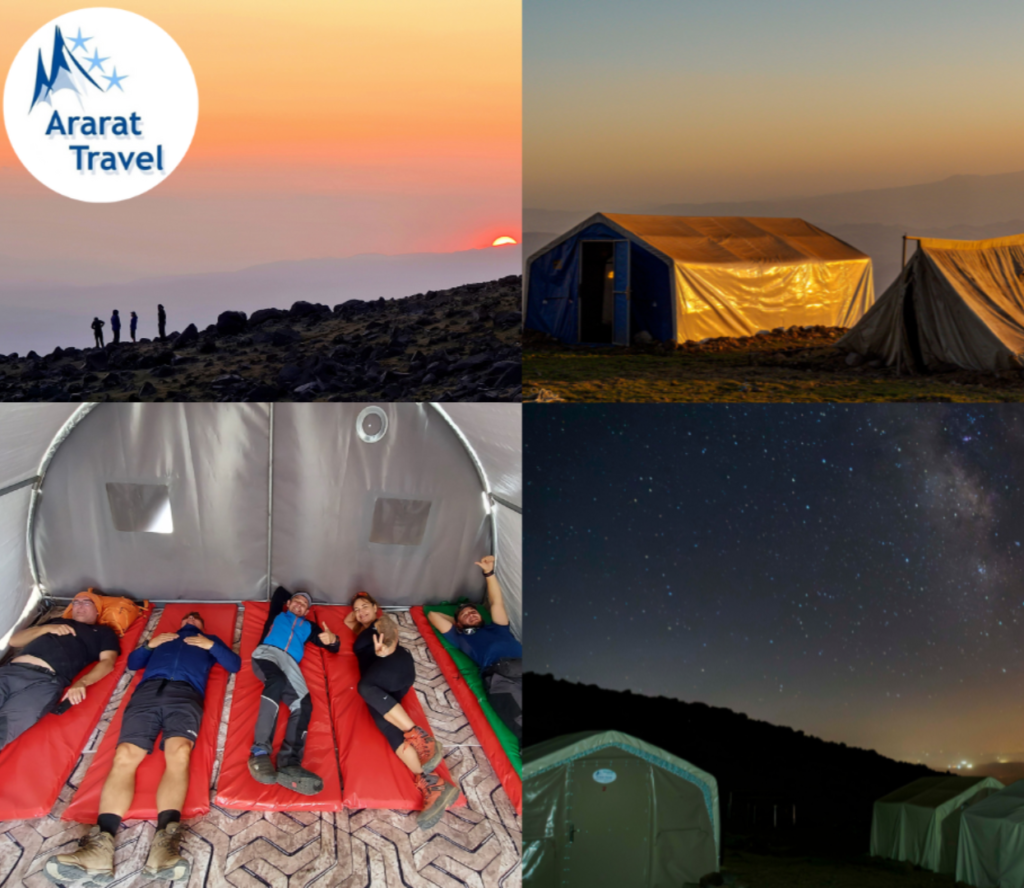
Today, Base Camp is the height of luxury. The shelter features a stone foundation and wooden beams supporting a white canvas roof—a structure dismantled in winter to withstand the snowfall. It includes a kitchen and a spacious dining area where tea or coffee always awaits, and where you can charge your phone using our solar panels. We no longer sleep in two-person expedition tents but in comfortable “cabins” equipped with rugs, cozy mattresses, and space to unpack. There are toilets and water tanks that we refill daily with glacier water. We now have a “yurt” that serves as storage for drinking water and food. The entire compound is enclosed by a stone wall; beyond it lies the loading and unloading area for the horses. For me personally, this is the most beautiful and peaceful place on Earth. To those unable to sleep, I recommend taking in the view on a clear night: the Milky Way stretching overhead, the lights of Doğubayazıt visible below, and the headlamps of groups that have begun the final ascent to the summit. Sometimes you can hear the bark of a dog or a fox. Occasionally, a flock of sheep or a group of donkeys wanders nearby. All of this makes us feel closer to the mountain.
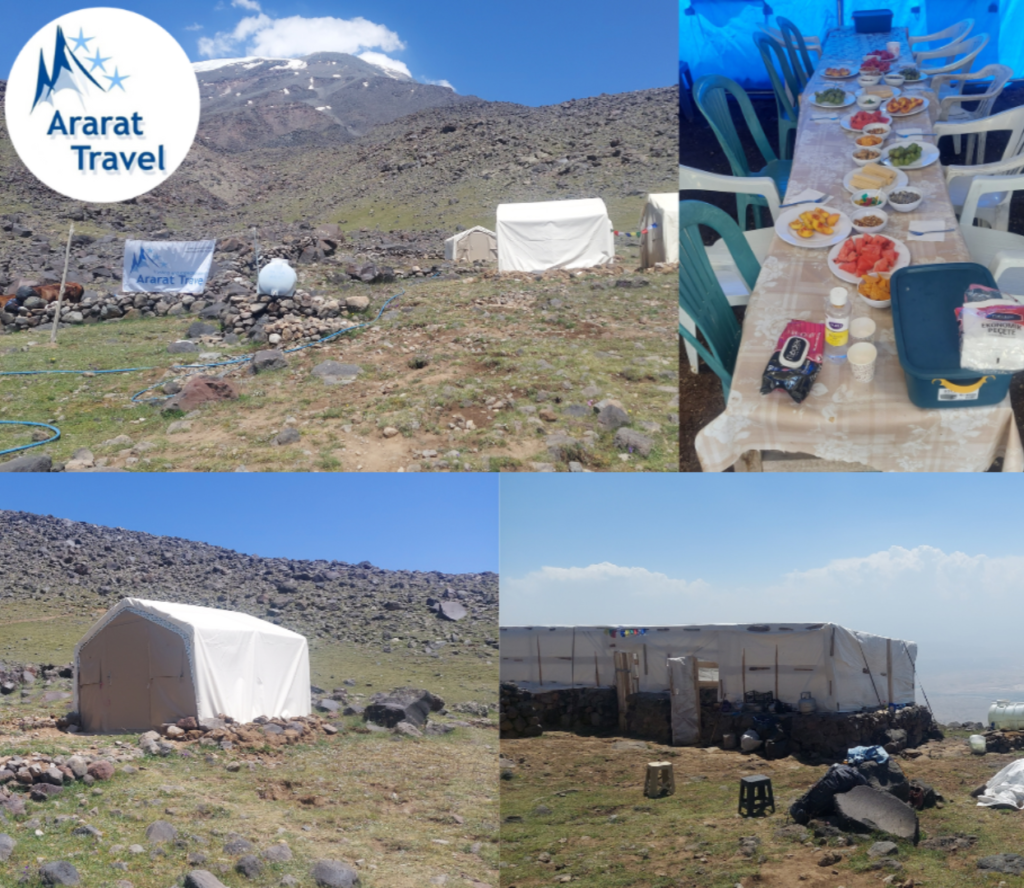
Camp 1, 3,200 m, current situation
The story of our improvements does not end there. Initially, after moving to our current location, we used a shared eastward route that served all the agencies and led to Camp 2. This meant having to pass through other camps before reaching the ascent trail. It is a heavily traveled route, with people coming and going and horses transporting food and luggage; there is constant dust, traffic, and bustle, and often nowhere to rest, as suitable spots are scarce. All of this unfolds against a very monotonous landscape, where the only real change is the slope of the terrain.
So Orhan set out to explore and found a route that avoided the crowds. Mapping and preparing the path took two years, but it was worth it. Now we cross meadows where we rest and pass by a glacier-fed waterfall. The landscape changes; leaving the meadows behind, we enter rockier terrain. We pass a cave. The final stretch leading to Camp 2 is strewn with huge boulders.
The situation at Camp 2 was similar to that at the 3,200-meter mark. There was a concentration of agencies, yet the terrain offered little space to pitch tents for everyone. The slope was steeper, and there was more loose scree. At times, windblown trash would fly from one tent to another. The horses were packed together. Sanitation facilities posed a challenge. Moreover, it was an international melting pot—a noisy place where people were resting at different times. The decision: we would relocate Camp 2.
We have moved even further west and are currently isolated from the other agencies. We have views of Lesser and Greater Ararat, peace and quiet, and a toilet.
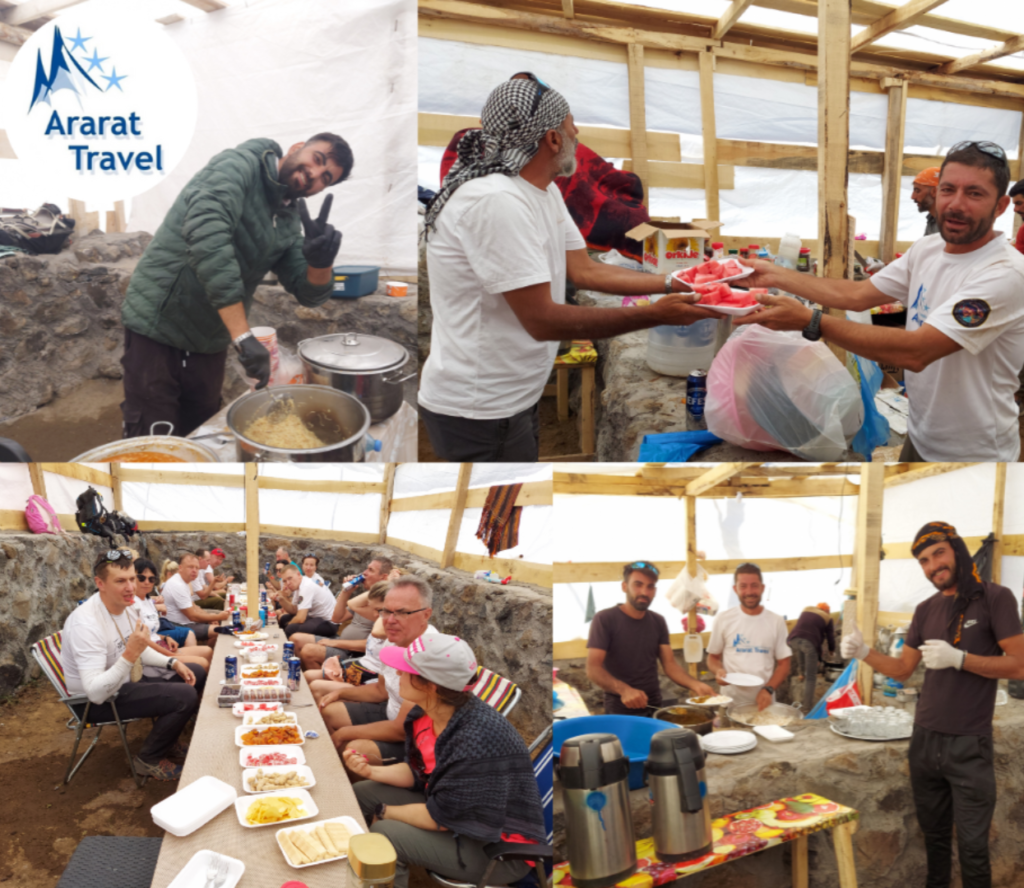
Shelter, kitchen, dining area: current trends
We strive to ensure your comfort and take everything you tell us into account. We are investing in and working hard for our own little piece of land in the mountains. Orhan says that in five years, we’ll have a Jacuzzi! 😀
Come visit us. This is our home—a place we fill with music, good food, and dancing throughout the season. We share our lives with you because Ararat is not just a summit to check off a list; it is a relationship built with the mountain during your stay.
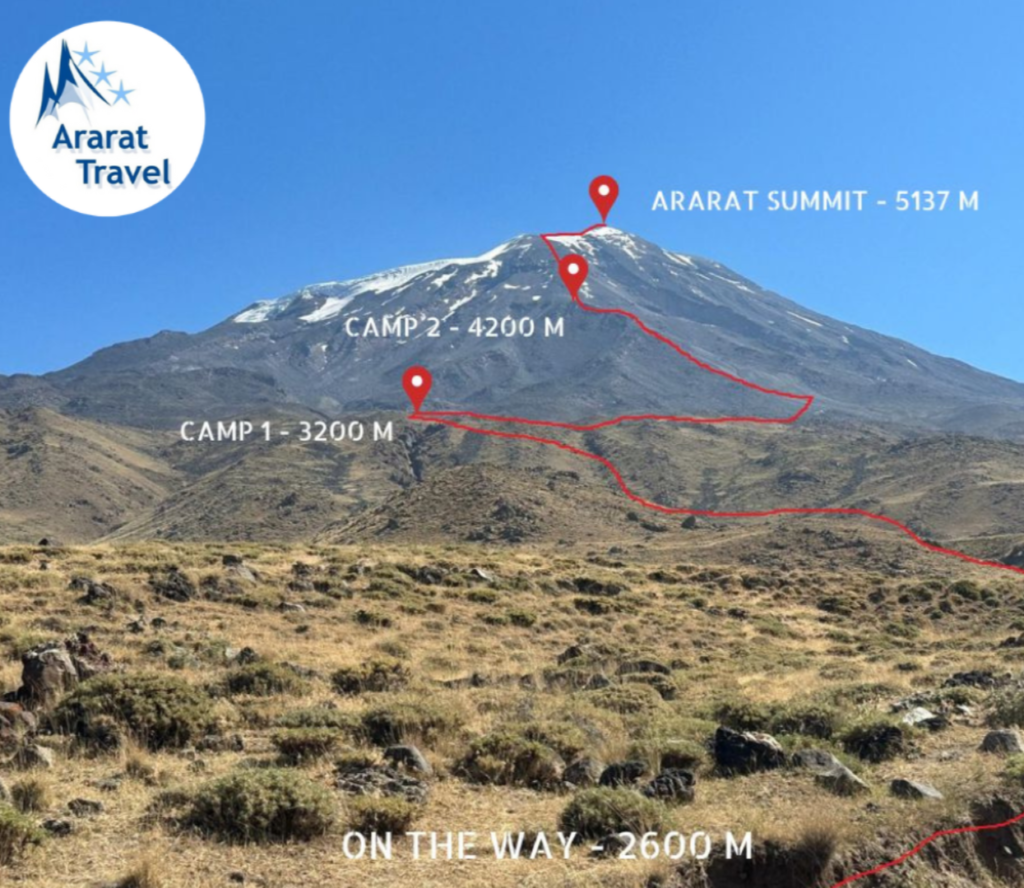
The road to Ararat before 2023
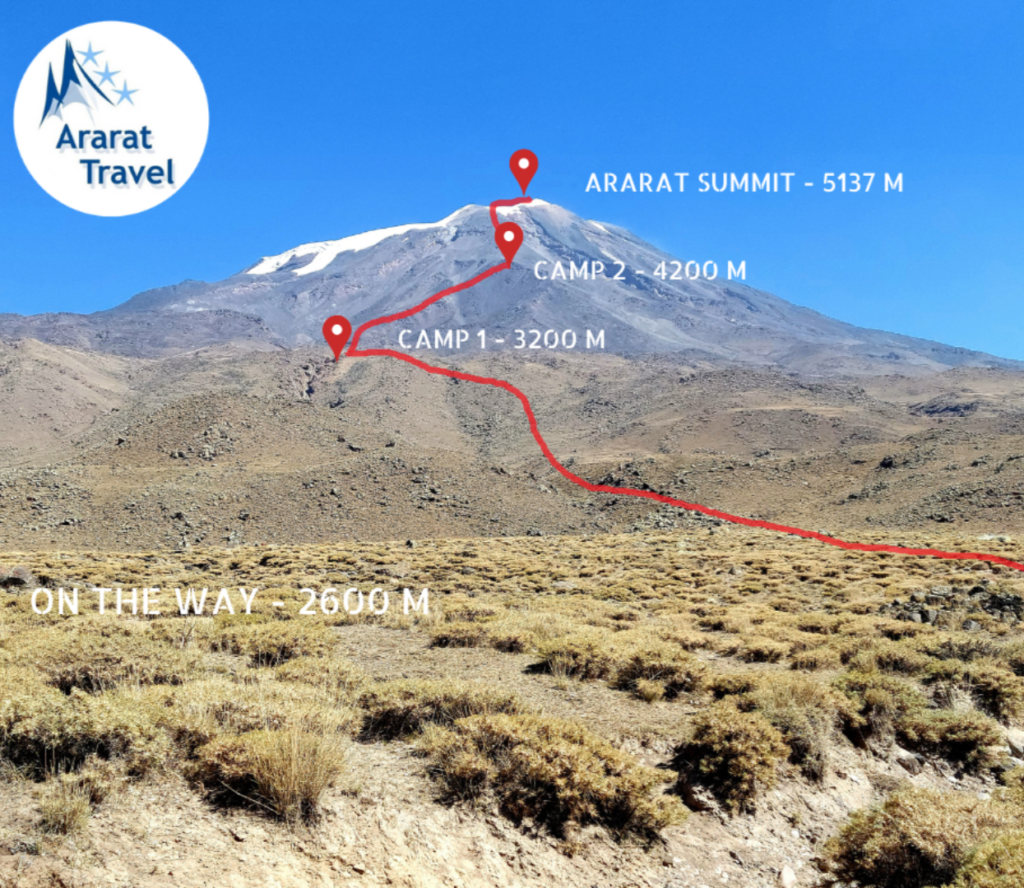
The road to Ararat today
Kasia
